918188084460
🇬🇧 English
🇬🇧 English
🇮🇳 हिन्दी
🇮🇳 मराठी
🇮🇳 தமிழ்
🇮🇳 తెలుగు
🇮🇳 ಕನ್ನಡ
🇮🇳 ਪੰਜਾਬੀ
🇮🇱 עברית
🇸🇦 العربية
🇧🇷 Português
🇪🇸 Español
Hi-Tech Agricultural Products & Farm Inputs

Anti-Hail Nets for Crop Protection

One Hailstorm Can Destroy an Entire Season — Protect Your Harvest with 5-Year UV-Stabilized Anti-Hail Nets — Agrifirst supplies Anti-Hail Nets in Raschel & Ginegar Leno weave — 5-year UV warranty, protecting crops from hail, birds & wind damage. Turnkey installation across North India's hail-prone regions.

View Products

Between Your Crop and the Next Hailstorm — There Should Always Be an Agrifirst Anti-Hail Net

Hail is one of the most catastrophic and unpredictable risks facing North Indian farmers. A single hailstorm lasting as little as five minutes can bruise and split fruit, shred foliage, snap flower stems, and strip an entire season's yield — leaving a crop that took months to establish completely unmarketable in hours. In apple orchards across Himachal Pradesh, strawberry farms in the Uttarakhand foothills, and open-field vegetable operations across Punjab and Haryana, hail damage is not a theoretical risk — it is a recurring seasonal reality that farmers either plan for or pay the consequences of.

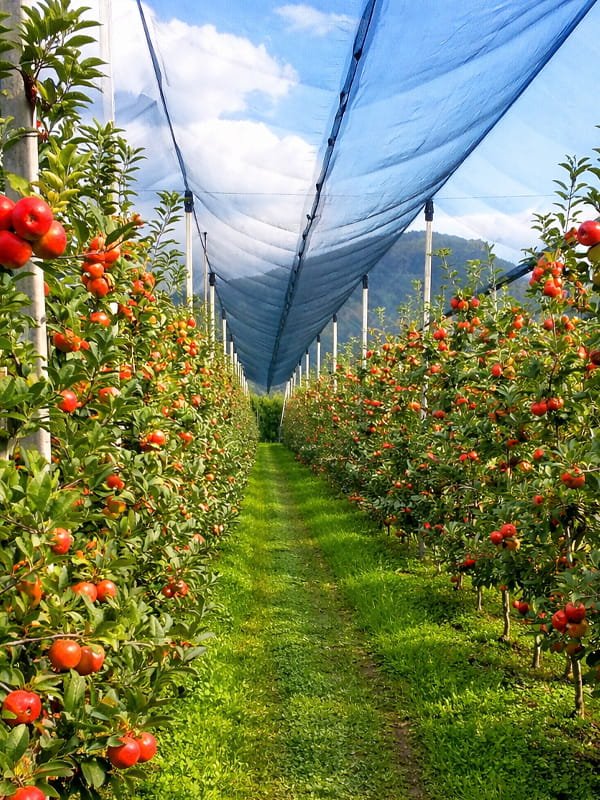
Anti-hail nets installed on a purpose-built support structure above the crop canopy provide a permanent, season-after-season defence against this threat. When hailstones strike the net, their kinetic energy is absorbed and distributed across the net's structure rather than transferring directly to the crop below — deflecting or fragmenting stones before they cause damage. The same net simultaneously functions as a bird exclusion barrier and provides secondary wind protection that reduces physical crop damage during storm events.

Agrifirst supplies two distinct anti-hail net constructions to match different installation requirements and performance priorities. The Agrifirst Anti-Hail Net Raschel is a knitted net offering excellent elasticity and impact absorption — ideal for farms requiring flexible installation across varied span widths. The Ginegar Anti-Hail Net Leno is a locked-weave construction offering superior dimensional stability and consistent mesh geometry under repeated impact — the preferred choice for permanent overhead installations in high-value orchards and commercial farms where long-term structural reliability is paramount. Both carry a 5-year UV stability warranty and are supplied with Agrifirst's full installation advisory support.
Between Your Crop and the Next Hailstorm — There Should Always Be an Agrifirst Anti-Hail Net

Anti-hail nets work by intercepting hailstones before they reach the crop canopy and absorbing or redirecting their kinetic energy across the net structure. When a hailstone strikes the net, the impact force is distributed across multiple mesh intersections and the net's elastic or locked structure absorbs and dissipates the energy — either deflecting the stone sideways or fragmenting it into smaller, lower-energy particles that fall harmlessly through the mesh without causing bruising, splitting, or physical crop damage. The effectiveness of this protection depends on the net's weave construction, tensile strength, and how tightly the net is installed on its support structure — a loosely hung net absorbs far less impact energy than one installed under correct tension.

Raschel and Leno refer to the manufacturing technique used to weave the net, which determines its physical properties and performance characteristics. Raschel nets are knitted — the yarn loops interlock in a flexible, elastic structure that stretches under impact and returns to its original shape, absorbing kinetic energy efficiently across a wide range of hailstone sizes and wind-driven impacts. This flexibility also makes Raschel nets easier to install across irregular span widths and varying support geometries. Leno weave nets use a mechanically locked warp and weft structure where each mesh intersection is fixed — preventing mesh distortion, maintaining consistent hole geometry under repeated impact, and delivering superior dimensional stability over long spans and across multi-year service periods. Leno weave is the industry standard for permanent overhead anti-hail installations in high-value orchards and commercial greenhouses.

The Agrifirst Anti-Hail Net Raschel is a UV-stabilized knitted anti-hail net with a 5-year UV warranty, engineered for reliable hail, bird, and wind protection across a wide range of farm types and installation configurations. Its elastic knitted structure makes it particularly well-suited to farms with varied span widths, non-standard support post spacings, or installations where some degree of net movement under wind load is acceptable. The Raschel construction is also preferred for seasonal or semi-permanent applications where the net is removed and re-installed between growing seasons — its flexibility makes handling, folding, and storage significantly easier than rigid Leno weave alternatives without compromising protective performance during active deployment.

The Ginegar Anti-Hail Net Leno is manufactured using Israel's leading greenhouse and agricultural protection film technology, with a mechanically locked Leno weave construction that maintains consistent mesh geometry and structural integrity under repeated high-impact hailstorm events over its full 5-year UV-warranted service life. The locked mesh structure prevents the progressive mesh distortion that knitted nets can experience after multiple severe impacts — ensuring the net continues to intercept hailstones efficiently throughout its service period without developing low-tension zones that reduce protection. It also provides reliable protection against birds, which is particularly important in fruit orchards and berry farms where bird damage can be as commercially significant as hail damage across the pre-harvest period.

Anti-hail net protection is most critical for high-value crops in regions with documented hail risk during the growing season. Apple orchards across Himachal Pradesh — particularly in Shimla, Kullu, and Kinnaur districts — face seasonal hail risk from March through June that directly threatens the pre-harvest fruit quality premium that determines the entire season's economics. Strawberry farms in Uttarakhand and higher-altitude Punjab face late winter and spring hail events during the critical flowering and fruit set period. Open-field capsicum, tomato, and floriculture operations across Punjab and Haryana are exposed to pre-monsoon hailstorms in April and May that frequently cause total crop loss. In all these cases, the cost of anti-hail net installation is recovered within one or two protected seasons compared to the alternative of total uninsured crop loss.

Yes — both the Agrifirst Raschel and Ginegar Leno anti-hail nets provide meaningful protection against birds and wind in addition to hail. Bird exclusion is a significant secondary benefit in fruit orchards, berry farms, and vegetable operations where birds cause direct crop consumption, fruit pecking damage, and contamination issues in the pre-harvest period. The physical net barrier prevents bird landing and feeding on covered crops without the noise, labour, or temporary effectiveness limitations of deterrent devices. For wind protection, the net reduces wind speed at the canopy level, limiting the physical damage from strong pre-monsoon and storm-associated winds that break branches, uproot staked crops, and cause fruit drop in the weeks before harvest.

Anti-hail nets are designed to maximise light transmission while providing structural protection — typically reducing incoming solar radiation by only 5–15% depending on the mesh density and colour of the net. For most field crops and orchards, this minor light reduction has no measurable impact on yield or fruit quality under North Indian solar intensity conditions. In some situations, the secondary light diffusion effect of the net can actually improve fruit colour uniformity and reduce sunburn on exposed fruit surfaces — a documented benefit in apple production where direct intense sunlight causes uneven colour development and russeting on premium varieties. Agrifirst can advise on the light transmission characteristics of both net types for your specific crop and installation geometry.

An effective anti-hail net installation requires a robust overhead support structure that holds the net at a sufficient height above the crop canopy to allow normal farm operations below, supports the combined dead load of the net and the dynamic load of accumulated hail and wind pressure, and maintains adequate net tension to maximize impact energy absorption. Typical support systems use GI pipe or steel posts at 4–6 meter intervals with horizontal wire or cable runs creating a grid pattern from which the net is suspended. The post depth, diameter, and anchor design must account for your specific soil type and expected wind loads. Agrifirst provides structural guidance and installation support as part of every anti-hail net supply, ensuring your support system is correctly specified for the net area, crop height, and regional wind and hail load conditions.

The return on investment for anti-hail net installation is fundamentally different from most farm inputs — rather than incrementally improving yield, it prevents catastrophic total loss events that would otherwise eliminate an entire season's revenue. For an apple orchard in Himachal Pradesh, a single unprotected hail event during the pre-harvest period can destroy 60–100% of the marketable crop — representing a loss that exceeds the entire cost of a properly installed anti-hail net system. For high-value vegetable and floriculture operations, even a partial hail event that causes 30–40% bruising damage renders the entire affected crop unmarketable to premium buyers. With a 5-year UV-warranted service life, the annual cost of Agrifirst's anti-hail nets across their service period is typically a fraction of the value of a single protected crop — making it one of the most financially compelling risk management investments available to North Indian farmers.

Agrifirst supplies both Agrifirst-branded Raschel and Ginegar Leno anti-hail nets — giving you a choice of construction type matched to your installation requirements and budget, both backed by 5-year UV warranties and genuine manufacturer quality assurance. Unlike general agricultural suppliers who stock a single net type, our technical team assesses your farm layout, crop type, regional hail risk profile, and support structure requirements before recommending the correct net specification, mesh density, and installation approach. We provide structural guidance for support system design, correct net tensioning protocols, and ongoing advisory support — ensuring your anti-hail net installation delivers its full protective performance from the first season through to the end of its warranted service life.

Success Stories

Real Farmers, Real Results

After completing my Agriculture degree, I chose full-time farming over a job. Discovering polyhouse cultivation transformed my journey. With Agrifirst’s superior structures and professional guidance, I now earn around ₹10 lakhs per acre annually. Choosing Agrifirst was the best decision— they’re not just builders but long-term partners in a successful farming future.
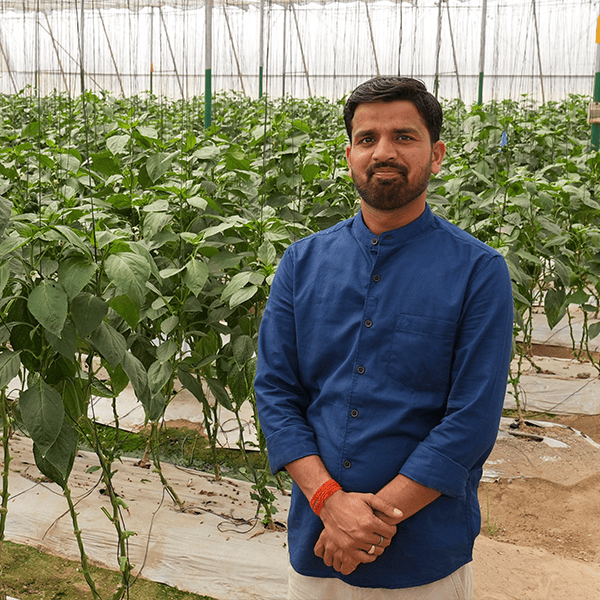
Agrifirst transformed my farming journey. From planning my first polyhouse to expert agronomy support, their team guided me at every step. With improved yields and consistent income, I expanded into multiple polyhouses and now earn over ₹35 lakhs annually. Agrifirst is a true growth partner for farmers like me.
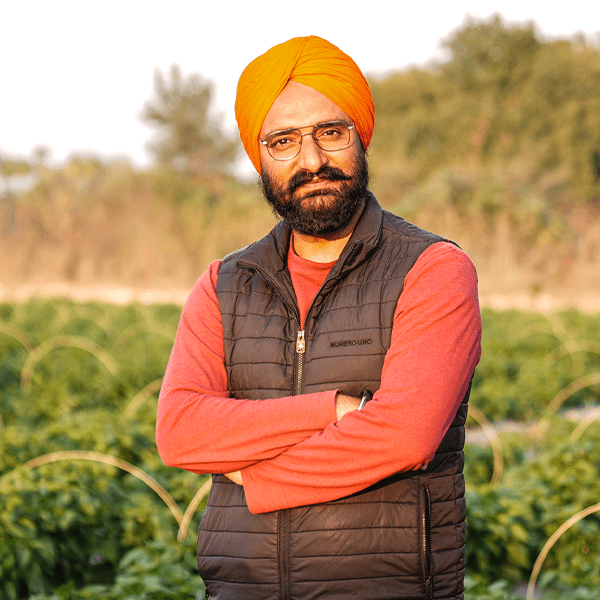
Coming from the handloom business, traditional farming gave low returns. Agrifirst introduced me to polyhouse cultivation and guided me from planning to agronomy. Within two years, my land productivity and profits transformed. Protected farming helped me rediscover passion and purpose. Agrifirst’s quality, professionalism, and support were key to my agricultural success.
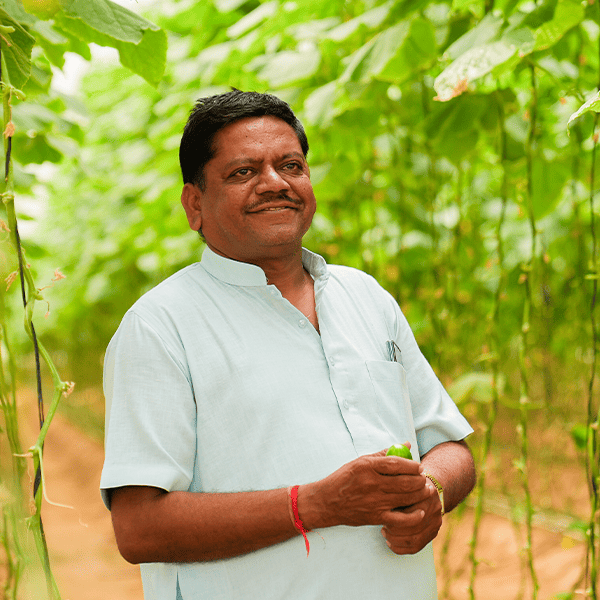
Agrifirst helped me build a successful 4-acre polyhouse farm in Sirsaganj. With their high-quality structures and continuous agronomy support, I now earn ₹60 lakhs annually from cucumber and capsicum cultivation. Their reliability and expert guidance make them a true partner in protected farming.
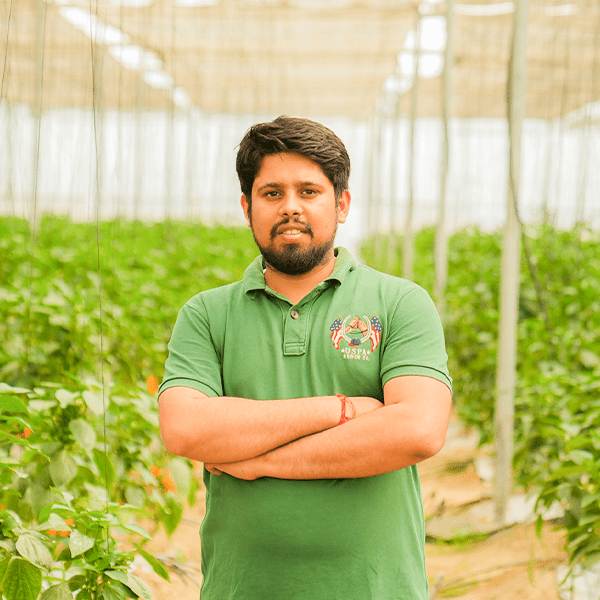
With 21 years in education, I explored protected farming for a sustainable venture. After visiting 19 polyhouses, I chose Agrifirst for their professionalism, quality, and agronomy expertise. Since 2019, I’ve grown cucumber in 1 acre, earning ₹18 lakhs annually. Agrifirst remains my trusted partner in this rewarding agricultural transformation.
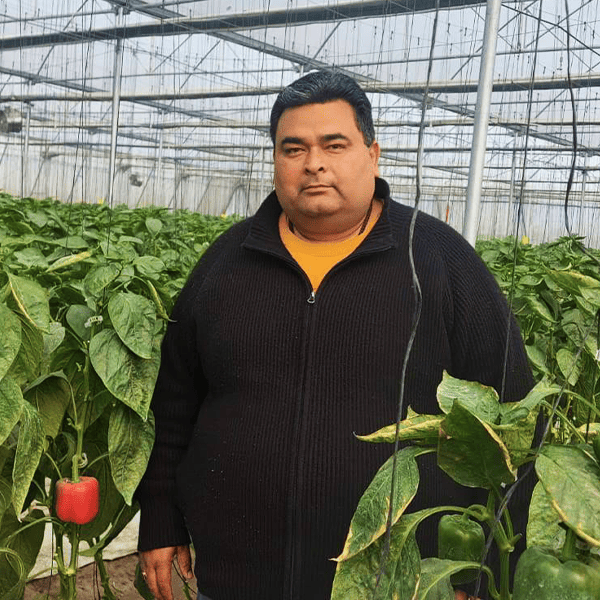
After challenges in running a flour mill, I shifted to agriculture for stability and clear returns. Months of research led me to Agrifirst’s unmatched execution and support. Today, I grow premium capsicum in 2 acres of polyhouse, earning ₹18 lakhs per acre annually. Agrifirst guided me from planning to success.
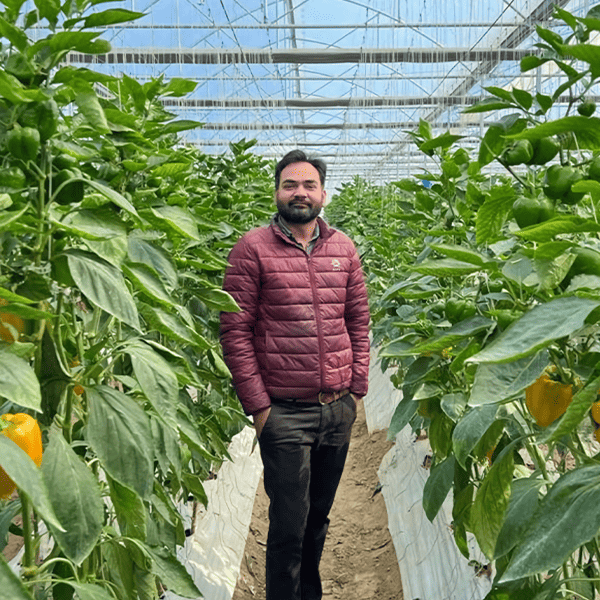
After my husband’s retirement, we explored polyhouse farming with Agrifirst’s transparent guidance. They supported everything—from planning, site selection, and subsidy processing to agronomy assistance. Today, I cultivate capsicum in 2 acres of Nethouse, earning ₹28 lakhs per acre. Agrifirst empowered me as a woman farmer and transformed our farmhouse vision.

After 15 years in IT, I entered farming with zero experience. Agrifirst guided me through planning, subsidies, setup and agronomy, making the journey seamless. Today, I earn ₹15+ lakhs annually from protected cultivation. Agrifirst didn’t just build my polyhouse—they built my future.
Looking for guidance?

Our agronomic and technical team is ready to help — for free.

Your Profession

Our experts are just a message away

Our Office Agrifirst Lucknow (Registered Office)

Plot No E-7, Industrial Area, Kanpur - Lucknow Rd, near Audi Service Center, Sarojini Nagar, Lucknow, Uttar Pradesh 226401, INDIA


Call Us 918188084460

Email Us info@agrifirst.in