918188084460
🇬🇧 English
🇬🇧 English
🇮🇳 हिन्दी
🇮🇳 मराठी
🇮🇳 தமிழ்
🇮🇳 తెలుగు
🇮🇳 ಕನ್ನಡ
🇮🇳 ਪੰਜਾਬੀ
🇮🇱 עברית
🇸🇦 العربية
🇧🇷 Português
🇪🇸 Español
Hi-Tech Agricultural Products & Farm Inputs

Anti-Insect Nets & Crop Protection Netting

Block Pests Physically & Optically — UV-Stabilized HDPE Insect Nets That Cut Chemical Use and Protect Every Crop — Agrifirst supplies Ginegar Opinet 50-mesh & HDPE Insect Nets in 105–135 GSM — 5-year UV warranty. Block whiteflies, thrips & aphids physically and optically. Reduce chemicals across North India.

View Products
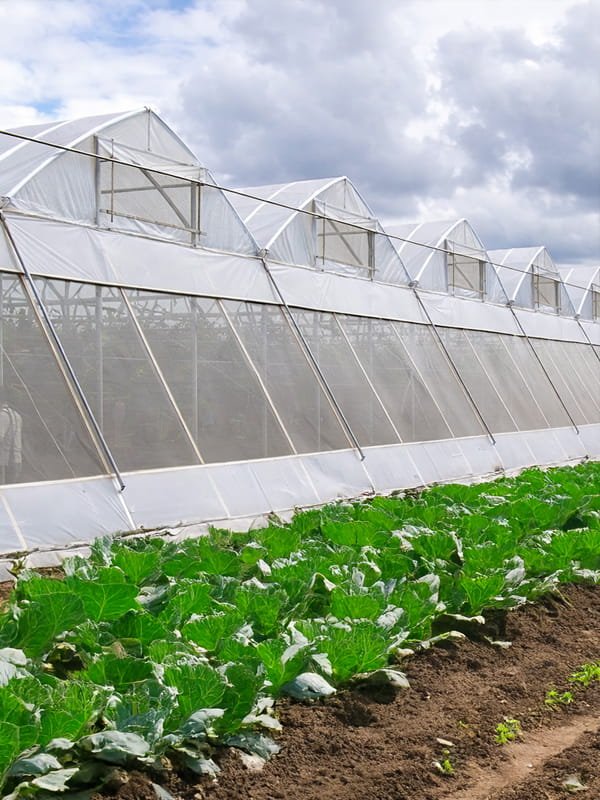
Stop Pests Before They Enter — Insect Exclusion Netting

Stop Pests Before They Enter — Insect Exclusion Netting

Every insecticide application is a response to a pest already inside your crop. By the time feeding damage is visible, the population is established. Insect exclusion netting eliminates this reactive cycle — creating a physical barrier that prevents entry, reduces virus transmission, cuts insecticide load, and produces more consistent, higher-quality yields.

Agrifirst supplies two solutions matched to different protection requirements. The Ginegar Opinet is a 50-mesh HDPE net with proprietary optical pest deterrence technology — physically blocking entry while visually disrupting approaching insects for dual-mechanism protection. Rated for 5-year UV stability, it is the premium choice for high-value crops where maximum exclusion is non-negotiable.

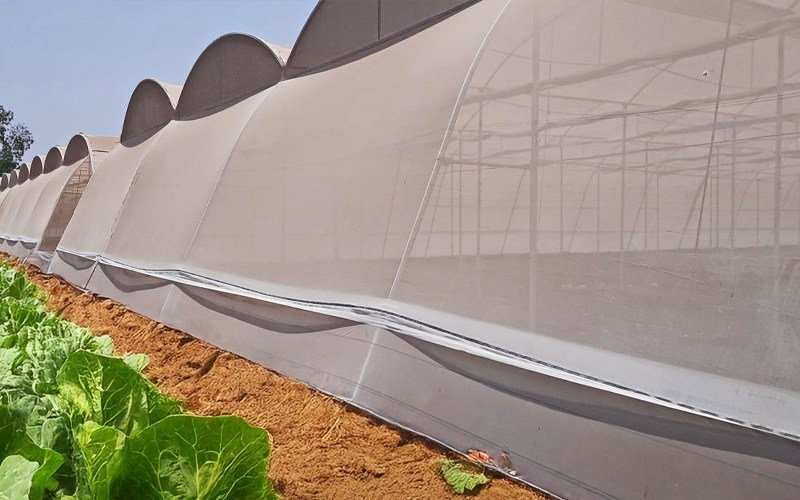
For standard commercial applications, our Agrifirst Insect Net (105–135 GSM) delivers reliable pest exclusion across greenhouses, shade net houses, and open-field tunnels — balancing exclusion effectiveness, airflow, and structural durability for vegetable, floriculture, and nursery operations across North India.

Insect exclusion nets create a physical mesh barrier at all crop entry points — vents, sidewalls, doorways, and tunnel openings — that prevents pest insects from reaching the growing environment entirely. This is fundamentally more effective than insecticide-based management because it eliminates pest exposure rather than controlling populations after they have established. Insecticides kill adult insects but rarely eliminate eggs and nymphs before virus transmission occurs — a single viruliferous whitefly or aphid that enters a greenhouse and feeds on one plant before dying has already transmitted Tomato Yellow Leaf Curl Virus or Cucumber Mosaic Virus, causing irreversible crop damage no subsequent spray programme can reverse. Insect nets prevent that first feeding event from occurring.

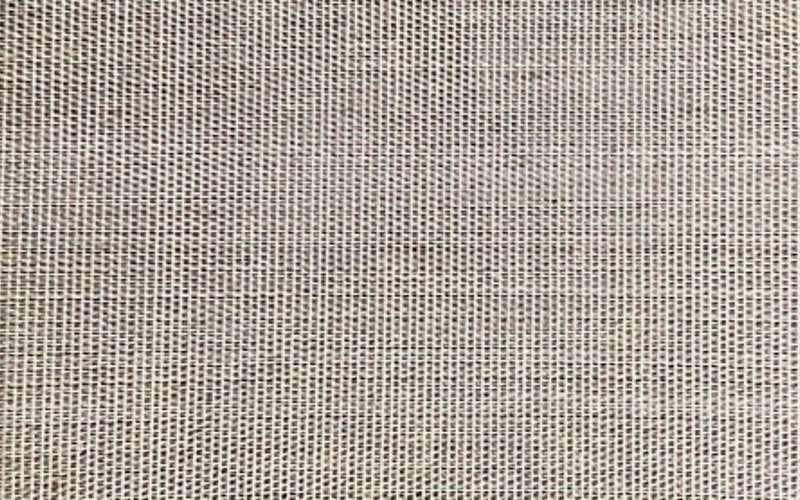
Ginegar Opinet is a next-generation 50-mesh HDPE insect net that provides pest protection through two simultaneous mechanisms. The first is physical exclusion — the 50-mesh aperture is fine enough to block the passage of whiteflies, thrips, aphids, leaf miners, and other key greenhouse pest species. The second mechanism is optical deterrence — Opinet incorporates Ginegar's proprietary light-manipulation technology that alters the wavelength and reflection profile of light passing through and reflecting off the net surface, creating a visual environment that disorients and deters pest insects from approaching the net. This optical effect reduces the pest pressure on the net surface itself, limiting the wear-through and contamination that occurs when pest populations persistently attempt to breach standard nets — making Opinet a dual-action system that outperforms standard 50-mesh nets of equivalent physical aperture.

A 50-mesh net has an aperture of approximately 0.3–0.4mm, which physically excludes the majority of economically significant greenhouse and field crop pest insects. Whiteflies (Bemisia tabaci and Trialeurodes vaporariorum) — the primary vectors of Tomato Yellow Leaf Curl Virus and other devastating begomoviral diseases — are reliably excluded at 50-mesh. Aphids, which vector Cucumber Mosaic Virus and Potato Virus Y among others, are excluded. Thrips, leaf miners, and fungus gnats are also blocked at this aperture. Larger pests including caterpillar moths, beetles, and bugs are excluded by any commercially available insect net. The 50-mesh Ginegar Opinet therefore provides protection against virtually the complete spectrum of economically significant insect threats in North Indian greenhouse and protected cultivation environments.

Agrifirst Insect Net is a UV-stabilized HDPE woven insect exclusion net available in 105 and 135 GSM weight ratings, both carrying a 5-year UV stability warranty for reliable multi-season service. The GSM rating reflects the weight and density of the net fabric — higher GSM means a denser, heavier net with stronger tear resistance, better dimensional stability under wind load, and longer mechanical service life under the physical stresses of greenhouse sidewall and vent applications. The 105 GSM net is suited to internal vent and opening applications where lighter weight reduces the operational effort of opening and closing ventilation panels. The 135 GSM net is the preferred specification for permanent sidewall installations, large vent panels, and open-field tunnel applications where the net must withstand sustained wind pressure and physical contact during daily farm operations.

Fine mesh insect nets do reduce airflow compared to an open vent — and this is the primary design challenge in insect-netted greenhouse ventilation. A 50-mesh net reduces airflow by approximately 30–40% compared to the equivalent unnetted opening, which means that naturally ventilated polyhouses using insect nets on all vents require larger total vent area to maintain the same air exchange rate as an unnetted structure. In Fan & Pad structures, the reduced airflow through netted cooling pad inlets must be compensated by increased fan capacity. Agrifirst advises on the correct vent sizing, fan specification adjustment, and net placement geometry for your specific greenhouse design to ensure that pest exclusion is achieved without creating the heat stress and humidity buildup that under-ventilated netted structures experience during North India's peak summer months.

Ginegar Opinet is the right choice in four specific situations: when you are growing high-value virus-susceptible crops like tomatoes, capsicum, and cucumbers in areas with documented high whitefly or thrips pressure; when previous seasons have seen insect breakthrough into netted structures despite standard mesh protection; when your crop's market value justifies the premium investment in maximum-specification pest exclusion; and when the dual optical-physical protection mechanism of Opinet offers a meaningful additional margin of security over standard nets for your specific pest pressure profile. The standard Agrifirst Insect Net in 105–135 GSM provides excellent pest exclusion for the majority of commercial applications — Opinet is the upgrade for the most demanding pest environments and highest-value crop situations.

When pest insects cannot enter the growing environment, the reactive spray programmes designed to manage established pest populations become largely unnecessary. Commercial greenhouse operations that have implemented comprehensive insect exclusion netting consistently report 40–70% reductions in insecticide application frequency compared to unnetted structures — with corresponding reductions in chemical input costs, residue risk on produce, and worker chemical exposure during spray operations. For farms supplying modern retail chains, export markets, and food processing companies with Maximum Residue Level requirements, the ability to demonstrate reduced pesticide use through physical exclusion is an increasingly valuable food safety credential that insect netting directly supports.

Yes — insect nets are increasingly used in open-field crop protection in three main configurations. Low tunnel insect nets are draped directly over crop rows on wire hoops, creating an enclosed protected microclimate that excludes flying pests during critical crop stages without requiring a full structure. Side curtain netting around open field plots on lightweight post-and-wire frames creates a barrier that significantly reduces pest immigration from surrounding vegetation and neighbouring fields. Full-coverage insect net houses — essentially shade net structures with insect net as the covering material — provide complete open-field crop exclusion for high-value crops like strawberries, baby leaf vegetables, and premium herbs where full enclosure is commercially justified. Agrifirst advises on the correct open-field net configuration for your crop, pest pressure, and farm layout.

Both Agrifirst Insect Net and Ginegar Opinet carry 5-year UV stability warranties, reflecting their engineered service life under continuous outdoor and greenhouse UV exposure. Physical service life can extend beyond this period when nets are correctly installed without undue tension at fixing points, protected from contact with sharp structural edges that cause abrasion, and inspected regularly for the small tears and holes that pest insects exploit to gain entry. Net maintenance involves periodic cleaning to remove dust, pollen, and algae accumulation that progressively blocks airflow through the mesh — a gentle water wash from outside the structure is sufficient for most maintenance cleaning. Any tears or holes should be repaired immediately with compatible mesh repair tape, as even a small opening compromises the exclusion function of the entire installation.

Agrifirst supplies both the premium Ginegar Opinet and our commercial-grade HDPE Insect Net range — giving you a technically informed choice between next-generation dual-mechanism protection and reliable standard-specification exclusion, both backed by 5-year UV warranties and genuine manufacturer quality. Our team assesses your specific pest pressure profile, greenhouse design, vent configuration, and crop value before recommending the correct net specification — ensuring you are not overspending on premium specification where standard nets perform adequately, or under-specifying where virus-susceptible crops demand the maximum available protection. Agrifirst also advises on correct installation geometry, fixing systems, airflow compensation, and net maintenance protocols — providing the technical support that ensures your insect net investment delivers its full pest exclusion performance throughout its service life.

Success Stories

Real Farmers, Real Results

After completing my Agriculture degree, I chose full-time farming over a job. Discovering polyhouse cultivation transformed my journey. With Agrifirst’s superior structures and professional guidance, I now earn around ₹10 lakhs per acre annually. Choosing Agrifirst was the best decision— they’re not just builders but long-term partners in a successful farming future.
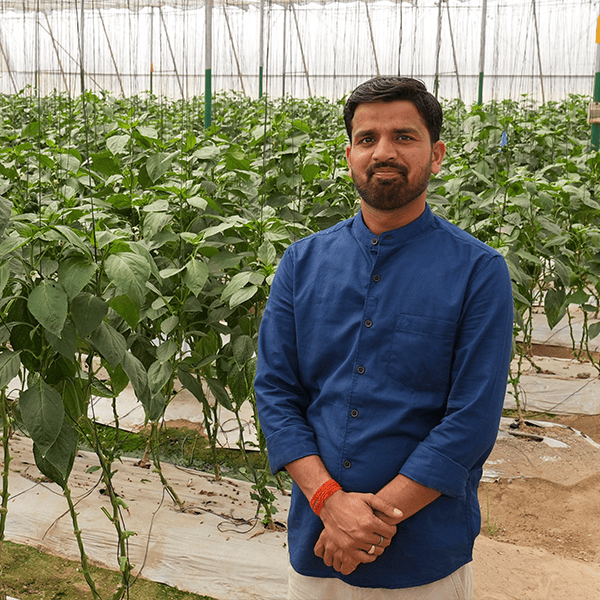
Agrifirst transformed my farming journey. From planning my first polyhouse to expert agronomy support, their team guided me at every step. With improved yields and consistent income, I expanded into multiple polyhouses and now earn over ₹35 lakhs annually. Agrifirst is a true growth partner for farmers like me.

Coming from the handloom business, traditional farming gave low returns. Agrifirst introduced me to polyhouse cultivation and guided me from planning to agronomy. Within two years, my land productivity and profits transformed. Protected farming helped me rediscover passion and purpose. Agrifirst’s quality, professionalism, and support were key to my agricultural success.
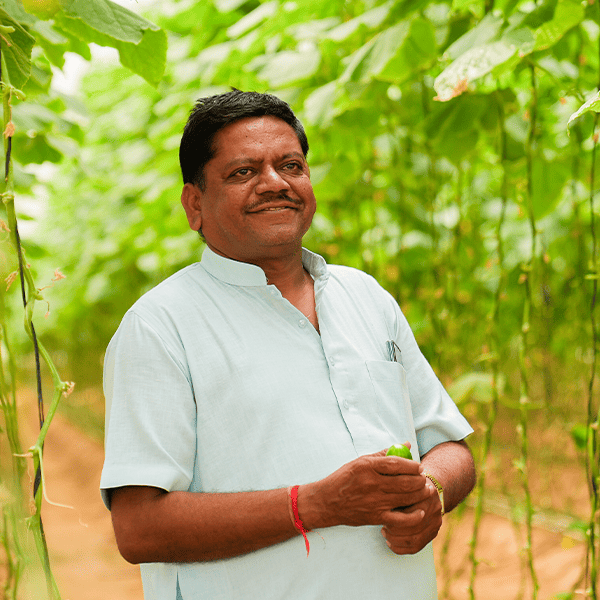
Agrifirst helped me build a successful 4-acre polyhouse farm in Sirsaganj. With their high-quality structures and continuous agronomy support, I now earn ₹60 lakhs annually from cucumber and capsicum cultivation. Their reliability and expert guidance make them a true partner in protected farming.
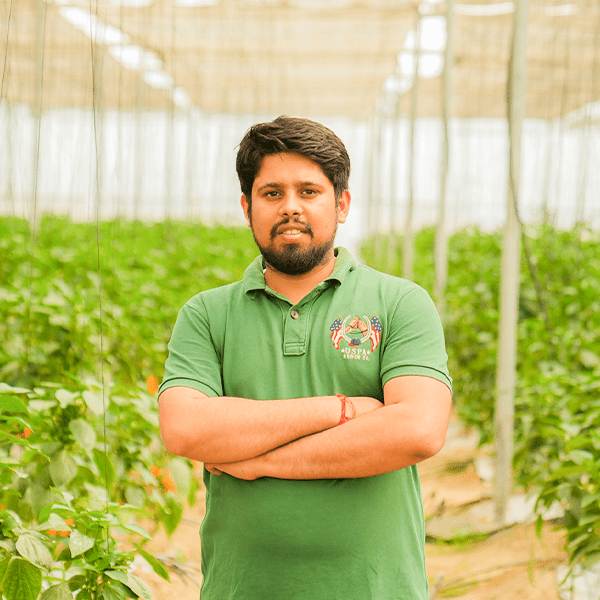
With 21 years in education, I explored protected farming for a sustainable venture. After visiting 19 polyhouses, I chose Agrifirst for their professionalism, quality, and agronomy expertise. Since 2019, I’ve grown cucumber in 1 acre, earning ₹18 lakhs annually. Agrifirst remains my trusted partner in this rewarding agricultural transformation.

After challenges in running a flour mill, I shifted to agriculture for stability and clear returns. Months of research led me to Agrifirst’s unmatched execution and support. Today, I grow premium capsicum in 2 acres of polyhouse, earning ₹18 lakhs per acre annually. Agrifirst guided me from planning to success.
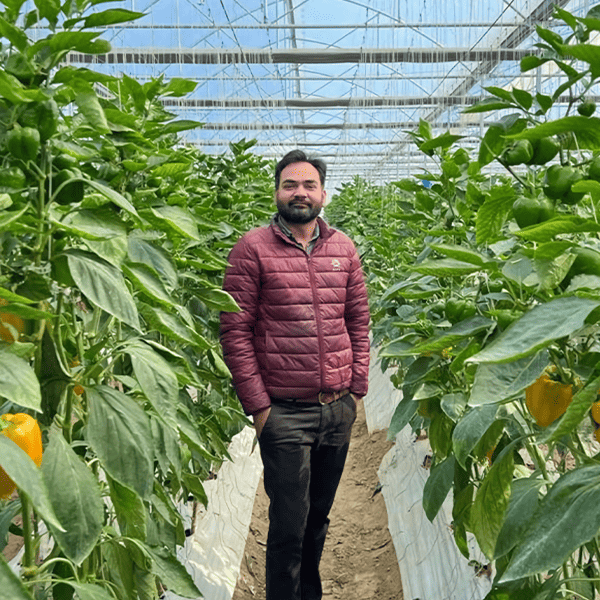
After my husband’s retirement, we explored polyhouse farming with Agrifirst’s transparent guidance. They supported everything—from planning, site selection, and subsidy processing to agronomy assistance. Today, I cultivate capsicum in 2 acres of Nethouse, earning ₹28 lakhs per acre. Agrifirst empowered me as a woman farmer and transformed our farmhouse vision.

After 15 years in IT, I entered farming with zero experience. Agrifirst guided me through planning, subsidies, setup and agronomy, making the journey seamless. Today, I earn ₹15+ lakhs annually from protected cultivation. Agrifirst didn’t just build my polyhouse—they built my future.
Looking for guidance?

Our agronomic and technical team is ready to help — for free.

Your Profession

Our experts are just a message away

Our Office Agrifirst Lucknow (Registered Office)

Plot No E-7, Industrial Area, Kanpur - Lucknow Rd, near Audi Service Center, Sarojini Nagar, Lucknow, Uttar Pradesh 226401, INDIA


Call Us 918188084460

Email Us info@agrifirst.in