
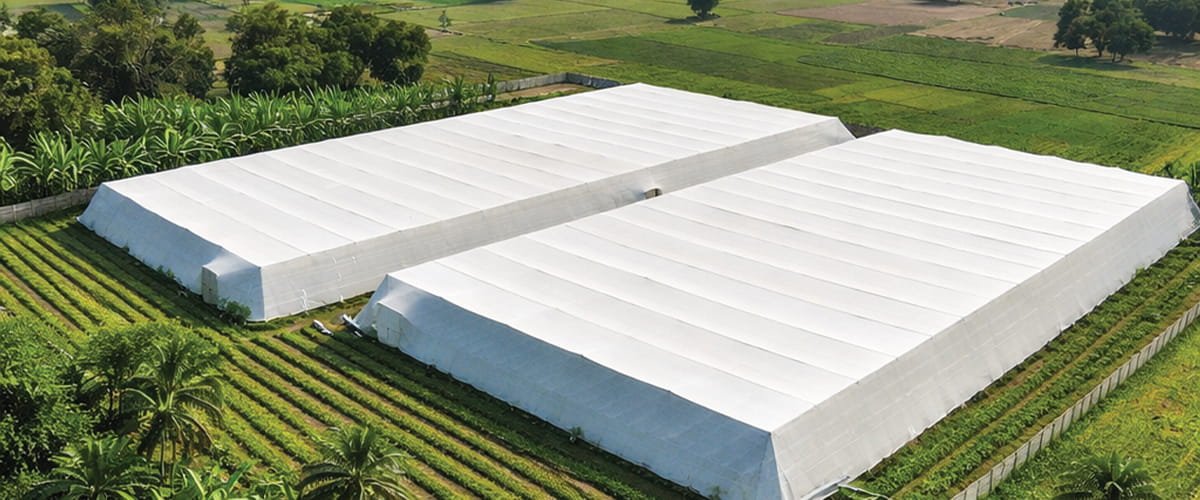
If you're looking for a protected cultivation investment that delivers strong returns without the capital intensity of a full polyhouse, net house farming is your answer. With government subsidies covering up to 50% of the cost, proven crop rotation strategies generating ₹7–9 lakhs in annual net profit, and a structure designed for zero maintenance — a 1-acre double layer net house represents one of the smartest agricultural investments available in India today.
In this detailed guide, we break down the complete economics of 1-acre soil-based net house farming — from structure costs and subsidy calculations to four crop rotation plans with real production data, along with everything you need to know before getting started.
Why Net House Farming Is India's Smartest Agricultural Investment
Open-field vegetable farming in India is a gamble. Unpredictable rains destroy crops, pest infestations wipe out harvests, and scorching summers reduce yields to a fraction of their potential. Farmers who rely solely on open-field cultivation often find themselves caught in a cycle of high input costs and low, uncertain returns.
Net house farming changes this equation entirely. By creating a protected growing environment using insect-proof mesh netting, a net house delivers:
- 2× more harvesting cycles per year — enabling year-round vegetable production
- 80% better ventilation compared to polyhouse structures — ideal for tropical Indian climates
- Near-complete pest exclusion — 40-mesh insect net blocks whiteflies, thrips, and other crop-damaging insects
- Significant reduction in pesticide costs — healthier crops with lower chemical dependency
- Protection from hail, heavy rain, and extreme sun — reducing crop damage dramatically
- 50% lower investment than polyhouses — with comparable per-acre returns for many crop types
When you combine these advantages with NHB/NHM subsidies that cover up to ₹14.20 lakhs per acre, the effective farmer investment drops to just ₹9–13 lakhs — with annual net returns of ₹7–9 lakhs. That's a potential payback period of under 2 years.
What Is a Double Layer Net House? — Structure, Design & Features
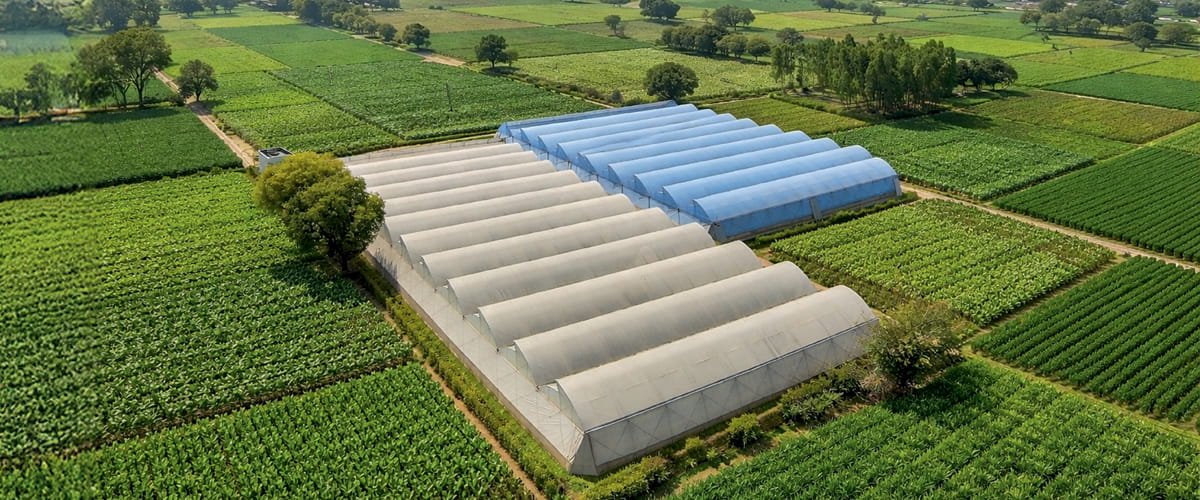
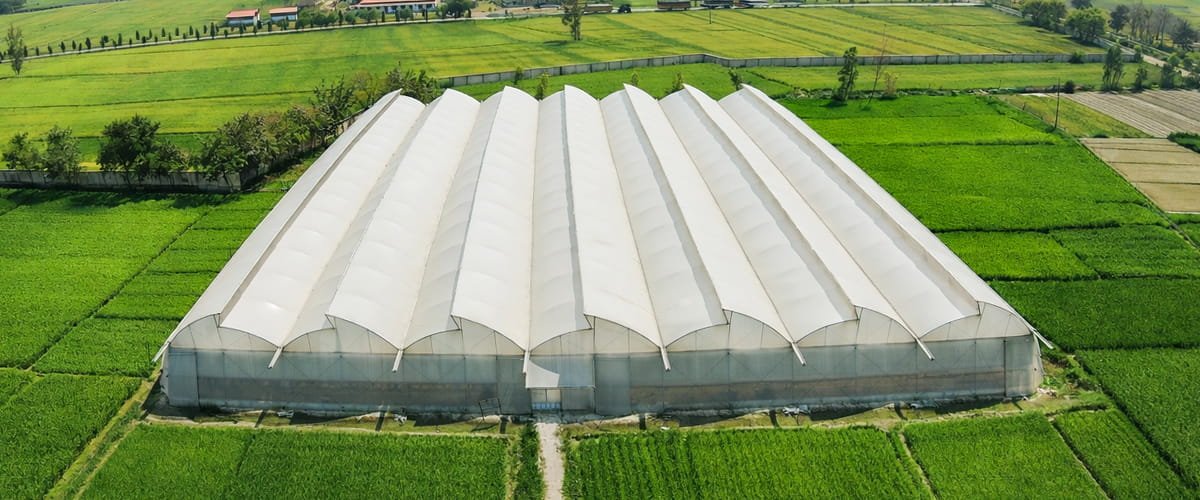
Agrifirst's wire cable net house is not a basic shade structure. It's an engineered protected cultivation system designed for commercial-scale vegetable production. Here's what makes it different from ordinary net houses available in the market:
Key Structural Features
| Feature | Specification |
|---|---|
| Structure Type | Double Layered Wire Cable Net House |
| Primary Covering | 140 GSM, 40-mesh insect-proof net on all sides and top |
| Secondary Layer | Shade net or Aluminet with pulley wheel movement system |
| Wind Resistance | Zero damage in high-velocity winds — wire cable tensioning system |
| Maintenance | Zero maintenance structure |
| Entry System | Double sliding aluminium frame doors + dedicated tractor door |
| Crop Compatibility | Suitable for all types of vegetable, flower, and fruit crops |
Why Double Layer Matters
The secondary layer — available in either shade net or aluminet — operates on a pulley wheel system that can be deployed or retracted based on weather conditions. During peak summer, the secondary layer reduces heat stress on crops. During winter, it can be retracted to allow maximum sunlight. This adjustability gives farmers precise control over their growing environment without the cost of automated climate control systems.
The 40-mesh insect net is specifically calibrated to block the most destructive vegetable crop pests — including whiteflies, aphids, and leaf miners — while allowing optimal airflow. Combined with the wire cable tensioning system, this creates a structure that is both functionally superior and structurally resilient.
1 Acre Net House Cost Breakdown — Investment, Subsidy & Farmer Share
One of the most important questions for any farmer considering net house farming is: "How much will it actually cost me?" Here's the complete cost breakdown for a 1-acre (4,092 sq mtr) Agrifirst double layer net house:
| Component | Rate per Sq Mtr | Total Cost (4,092 Sq Mtr) |
|---|---|---|
| Net House with Shade Net (Secondary Layer) | ₹562 | ₹22,99,704 |
| Net House with Aluminet (Secondary Layer) | ₹634 | ₹25,94,328 |
| NHB/NHM Subsidy (for 4,000 sq mtr) | ₹355 | ₹14,20,000 |
Farmer Investment (Shade Net)
₹9,00,000
Farmer Investment (Aluminet)
₹11,75,000
Important: The subsidy amount is paid by the grower to Agrifirst after the subsidy is credited to the farmer's account. Subsidy rates follow NHB or NHM (State Guidelines) and may vary by location. The shade net option at ₹9 lakhs farmer share represents exceptional value for a commercial-grade protected cultivation structure.
⚠️ Pricing Disclaimer: All prices, rates, and cost estimates mentioned in this article are approximate and based on prevailing rates at the time of publication. Actual costs may vary depending on location, material availability, market conditions, government policy changes, and project specifications. Subsidy amounts are subject to NHB/NHM guidelines and state-level policies, which may change without prior notice. Please contact Agrifirst directly for the latest pricing and subsidy information applicable to your region.
4 Proven Crop Rotation Plans with Detailed ROI Analysis
The real power of net house farming lies in strategic crop rotation. By selecting the right combination of crops and timing, farmers can maximize their annual returns from a single 1-acre structure. Here are four proven crop rotation plans with documented production data:
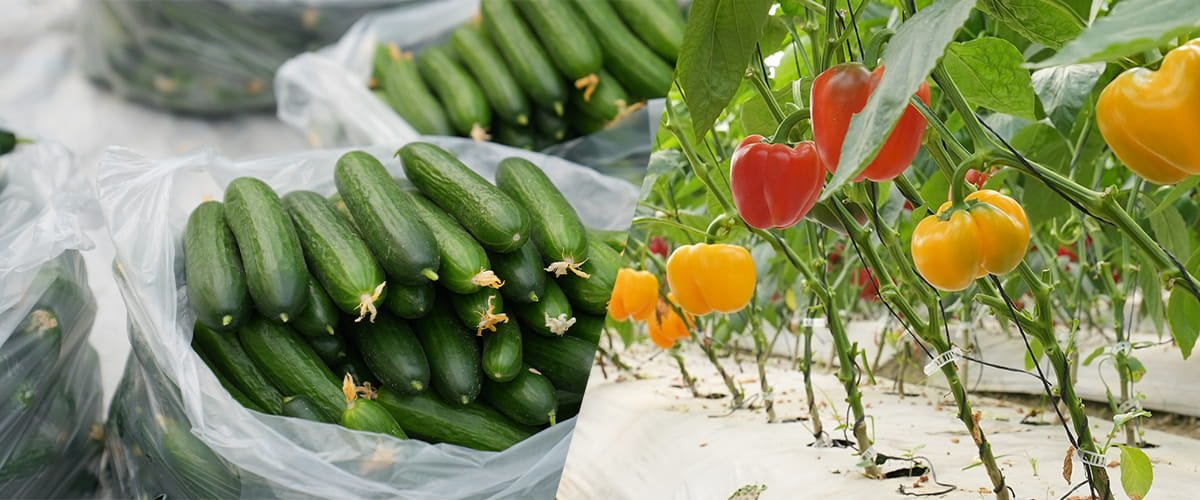
Plan 1: Colored Capsicum + Cucumber — ₹9,00,000 Net Return
| Crop | Growing Period | Production (Kg) | Avg Price (₹/Kg) | Gross Return | Cost of Cultivation | Net Return |
|---|---|---|---|---|---|---|
| Capsicum Red/Yellow | Aug – April | 12,000 | ₹100 | ₹12,00,000 | ₹5,50,000 | ₹6,50,000 |
| Cucumber (Seedless) | May – July | 25,000 | ₹20 | ₹5,00,000 | ₹2,50,000 | ₹2,50,000 |
| Rest Period for Soil — August | ||||||
| Total Annual Net Return | ₹9,00,000 | |||||
This is the highest-return plan, driven by the premium pricing of colored capsicum (red and yellow varieties) which command ₹100/kg in wholesale markets. The 9-month capsicum cycle followed by a fast 3-month cucumber rotation maximizes both revenue and soil utilization.
Plan 2: Tomato + Cucumber — ₹7,00,000 Net Return
| Crop | Growing Period | Production (Kg) | Avg Price (₹/Kg) | Gross Return | Cost of Cultivation | Net Return |
|---|---|---|---|---|---|---|
| Tomato (Regular) | Sep – April | 40,000 | ₹20 | ₹8,00,000 | ₹3,50,000 | ₹4,50,000 |
| Cucumber (Seedless) | May – July | 25,000 | ₹20 | ₹5,00,000 | ₹2,50,000 | ₹2,50,000 |
| Rest Period for Soil — August | ||||||
| Total Annual Net Return | ₹7,00,000 | |||||
The tomato-cucumber rotation is a volume-driven strategy. While per-kg prices are lower at ₹20, the massive 40,000 kg tomato yield compensates. This plan is ideal for farmers near urban markets where tomato demand is consistent year-round and involves lower cultivation complexity.
Plan 3: Green Capsicum + Cucumber — ₹7,25,000 Net Return
| Crop | Growing Period | Production (Kg) | Avg Price (₹/Kg) | Gross Return | Cost of Cultivation | Net Return |
|---|---|---|---|---|---|---|
| Capsicum (Green) | Sep – March | 25,000 | ₹25 | ₹6,25,000 | ₹1,50,000 | ₹4,75,000 |
| Cucumber (Seedless) | May – July | 25,000 | ₹20 | ₹5,00,000 | ₹2,50,000 | ₹2,50,000 |
| Rest Period for Soil — August | ||||||
| Total Annual Net Return | ₹7,25,000 | |||||
Green capsicum offers a strong profit margin due to its remarkably low cost of cultivation (₹1,50,000) — the lowest among all four plans. This makes it ideal for first-time net house farmers who want to minimize risk while building experience with protected cultivation management.
Plan 4: Double Cucumber Cycle — ₹7,50,000 Net Return
| Crop | Growing Period | Production (Kg) | Avg Price (₹/Kg) | Gross Return | Cost of Cultivation | Net Return |
|---|---|---|---|---|---|---|
| Cucumber (Seedless) | Jan – May | 35,000 | ₹20 | ₹7,00,000 | ₹3,00,000 | ₹4,00,000 |
| Cucumber (Seedless) | Sep – Dec | 30,000 | ₹20 | ₹6,00,000 | ₹2,50,000 | ₹3,50,000 |
| Rest Period for Soil — June to August | ||||||
| Total Annual Net Return | ₹7,50,000 | |||||
The double cucumber cycle is the simplest plan to execute — a single crop grown twice a year. With a combined production of 65,000 kg and a steady ₹20/kg market price, this plan suits farmers who want to master one crop before diversifying. Cucumber is fast-growing, high-yielding, and has consistent market demand.
ROI Summary — All 4 Plans at a Glance
| Crop Plan | Annual Net Return | Payback Period* | Risk Level |
|---|---|---|---|
| 🏆 Colored Capsicum + Cucumber | ₹9,00,000 | ~1.5 years | Medium-High |
| Double Cucumber Cycle | ₹7,50,000 | ~1.8 years | Low |
| Green Capsicum + Cucumber | ₹7,25,000 | ~1.8 years | Low-Medium |
| Tomato + Cucumber | ₹7,00,000 | ~1.9 years | Low |
*Payback period calculated against total setup cost of ₹13.30 lakhs (with shade net option after subsidy).
⚠️ Earnings Disclaimer: The crop yields, market prices, and net returns presented above are estimates based on average growing conditions and historical market data. Actual earnings may vary significantly depending on factors including weather conditions, crop management practices, seed quality, pest incidence, local market demand, and price fluctuations. These projections are intended for reference purposes only and should not be treated as guaranteed returns. Agrifirst recommends consulting with our agronomists for a customized crop plan tailored to your specific location and conditions.
Complete Setup Cost for 1 Acre Net House Operation
The net house structure is only part of the total investment. Here's the complete setup cost to get your 1-acre net house operation fully operational:
| S.No. | Particulars | Area (Sq Mtr) | Amount (₹) |
|---|---|---|---|
| 1 | Net House Structure — Farmer Share (Shade Net, 50% Subsidy) | 4,000 | ₹9,00,000 |
| 2 | Accessories (Seeds, Twine, J-Hook, Clips, Mulching Film) | 4,000 | ₹2,30,000 |
| 3 | Miscellaneous (Irrigation setup, soil preparation, tools) | — | ₹2,00,000 |
| TOTAL SETUP COST | ₹13,30,000 | ||
At a total setup cost of ₹13.30 lakhs and annual net returns ranging from ₹7–9 lakhs, the investment payback period is approximately 1.5 to 2 years. From the third year onward, the net house generates near-pure profit (only cultivation costs, no structural investment) — making this one of the highest-ROI agricultural investments available.
⚠️ Disclaimer: All production quantities, market prices, setup costs, and financial projections mentioned in this article are estimates based on average conditions and are intended for informational purposes only. Actual figures may vary depending on location, climate zone, market proximity, input costs, farming efficiency, and prevailing government policies. This content does not constitute financial or investment advice. Readers are advised to conduct their own due diligence and consult with Agrifirst's agronomists for project-specific assessments before making any investment decisions.
Critical Factors to Evaluate Before Starting Net House Farming
A successful net house operation begins long before the structure is installed. Here are the critical factors that Agrifirst's agronomists evaluate during the planning phase:
Site Selection & Land Assessment
- Soil type, fertility, and water test analysis — determines crop suitability and amendment requirements
- Upland field site selection — ensures natural drainage and prevents waterlogging
- Slope assessment — optimal slope for water runoff without soil erosion
- Air ventilation surrounding the site — ensures adequate airflow for crop health
Environmental Considerations
- Dust and smoke pollution in the area — affects net mesh life and crop quality
- Rainwater drainage planning — prevents structural damage and root zone flooding
- Structure height optimization — balances ventilation with structural stability
- Covering film properties selection — UV stabilization, light transmission, and durability
Agrifirst's research-driven advisory process evaluates all these factors before recommending a structure design. This pre-installation assessment is what separates a commercially successful net house operation from one that underperforms — and it's included free with every Agrifirst project.
Post-Installation Operations — From Soil Prep to Harvest
Once the net house structure is installed, a systematic operational workflow ensures optimal crop performance. Here's the complete sequence of operations that Agrifirst's agronomists guide farmers through:
Soil Amendment
(if required)
Field Preparation
& Solarization
Nursery
Raising
Plantation
& Transplanting
Irrigation &
Fertigation
Environment
Management
Plant Training
& Pruning
Plant
Protection
Harvesting
& Marketing
Each of these stages requires specific knowledge and timing. Agrifirst's agronomists provide hands-on guidance through every step — from soil testing and bed preparation to harvest scheduling and market planning. This end-to-end support is what transforms a net house structure from a mere construction project into a profitable farming enterprise.
Start Your Net House Farming Journey with Agrifirst
With 450+ successful protected cultivation projects across India, Agrifirst brings unmatched expertise to net house farming. From the initial site assessment and structure design to installation, crop planning, and ongoing agronomy support — every step is handled by professionals who are invested in your success.
Here's what you get with every Agrifirst net house project:
- Free site assessment and crop advisory — tailored to your land and climate
- Subsidy documentation support — assistance with NHB/NHM applications
- Professional installation — by trained teams, not local labor
- Free lifetime agronomist support — crop planning, pest management, harvest optimization
- Farmer workshops every 15 days — continuous learning and community support
Ready to Build Your 1-Acre Net House?
Get a free consultation, site assessment, and customized crop plan. Start earning ₹7–9 lakhs annually from just 1 acre.
Agrifirst (formerly Agriplast North India) — Plot No E-7, Industrial Area, Kanpur-Lucknow Road, Sarojini Nagar, Lucknow, Uttar Pradesh 226401.
Don't let another season pass with uncertain open-field returns. Invest in a net house today and start building predictable, profitable farming income — backed by the company that 450+ farmers already trust.



Share your thoughts