
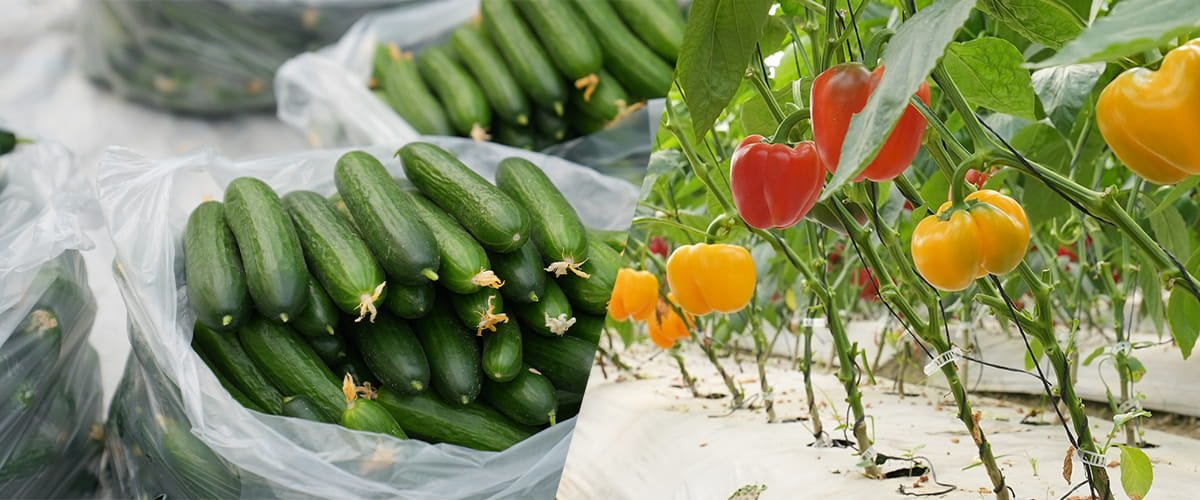
The Naturally Ventilated Polyhouse (NVPH) has emerged as the most effective protected cultivation structure for Indian conditions. With Israeli-origin engineering adapted for tropical climates, an NVPH delivers 80% better ventilation than conventional polyhouses, enables 2× more harvesting cycles per year, and creates the ideal growing environment for high-value crops like colored capsicum and seedless cucumber.
But how much can a farmer actually earn from a 1-acre NVPH? This guide presents the complete crop economics — backed by real production data from Agrifirst polyhouse projects — covering yield projections, month-wise harvest revenue, detailed operational cost breakdowns, and net profit calculations for both capsicum and cucumber farming.
Why NVPH Polyhouse Is the Ultimate Choice for Indian Farmers
Conventional open-field farming in India faces a triple threat: unpredictable weather destroying crops, pest infestations reducing yields, and climate change making traditional growing seasons increasingly unreliable. Farmers relying solely on open-field cultivation often experience up to 10% yield reduction due to weather volatility alone.
A Naturally Ventilated Polyhouse solves these challenges by creating a controlled growing environment that delivers measurably superior results:
- 80% more ventilation compared to conventional polyhouse designs — ideal for India's tropical positioning near the equator
- 2× more harvesting cycles per year — enabling year-round high-value vegetable production
- Zero maintenance structure — Israeli-designed frames built for long-term durability
- Near-complete pest exclusion — insect-proof mesh netting blocks whiteflies, thrips, and leaf miners
- Dramatic reduction in pesticide costs — producing safer, residue-free vegetables
- Protection from hail, heavy rain, and extreme sun — eliminating weather-related crop loss
- Premium market pricing — polyhouse-grown colored capsicum and cucumber command 2–3× higher prices than open-field produce
When you combine these advantages with optimized crop rotation, a single 1-acre NVPH can generate annual net returns between ₹16–18 lakhs — transforming farming from a survival activity into a profitable business enterprise.
Understanding NVPH — Design, Features & Why It Outperforms Other Structures
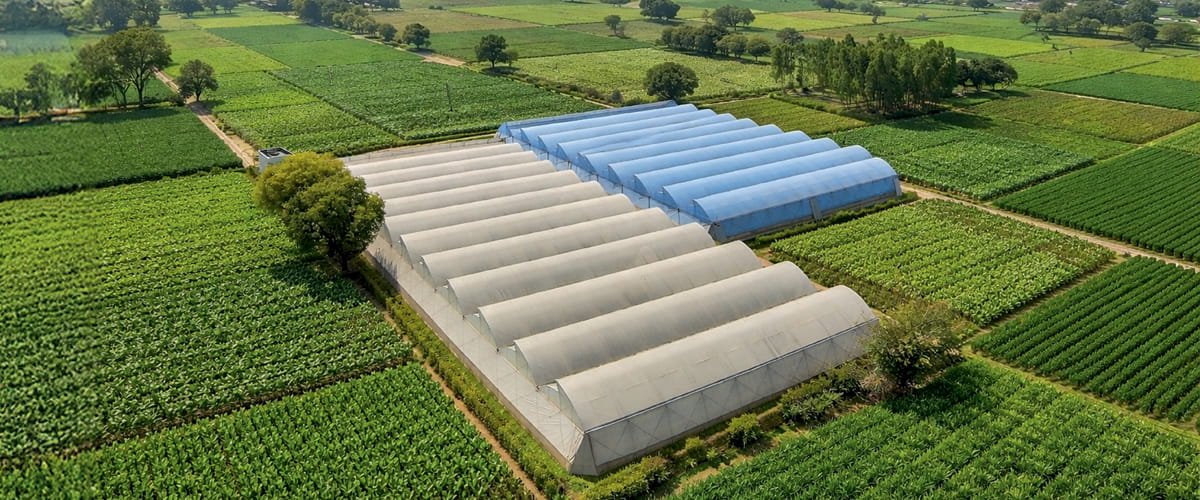
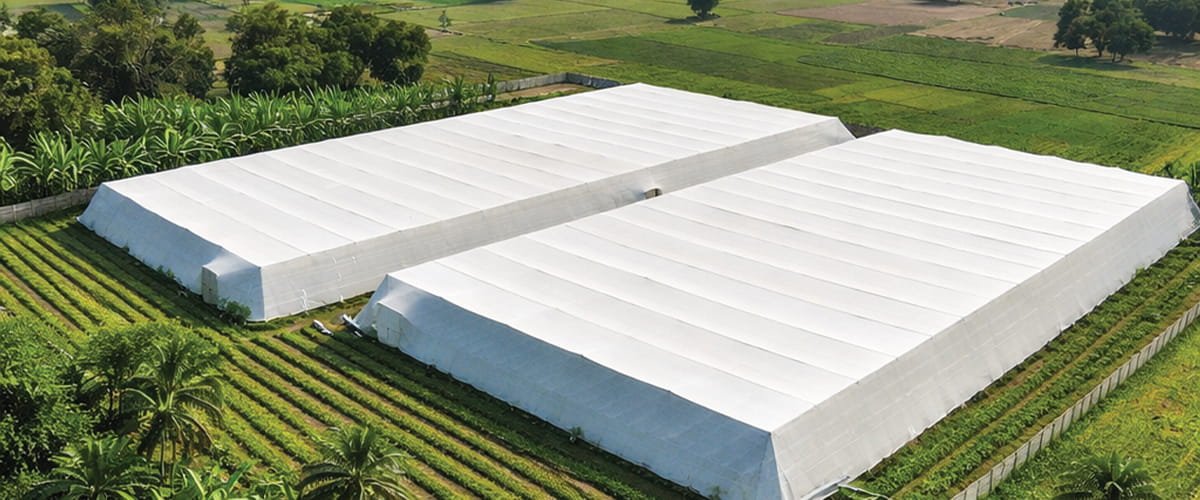
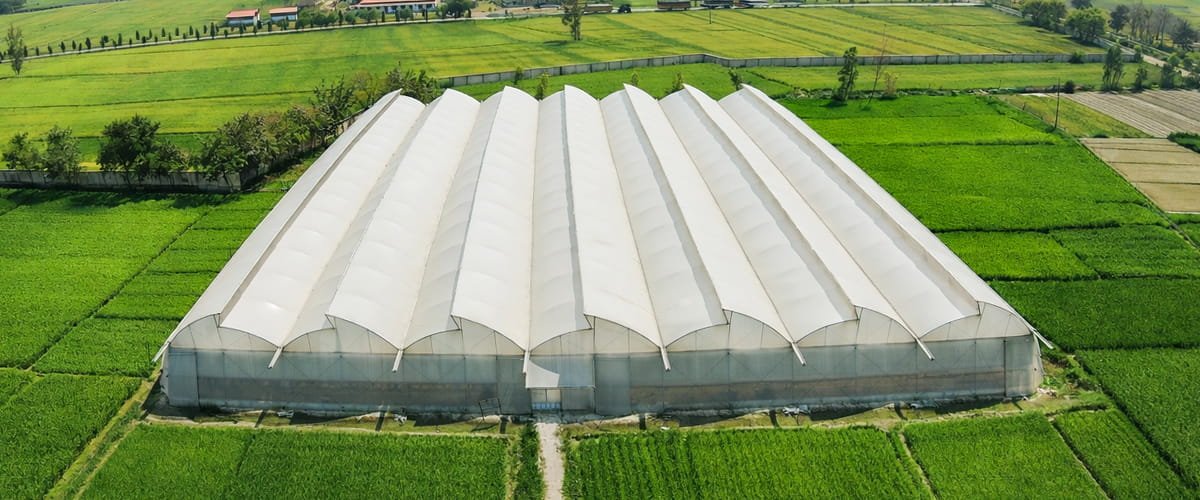
Agrifirst's Naturally Ventilated Polyhouse is not a generic greenhouse structure. It is an engineered growing system designed specifically for Indian climatic conditions using Israeli polyhouse technology. Here's what makes an NVPH different from ordinary polyhouses and net houses:
Key NVPH Structural Advantages
| Feature | NVPH Advantage |
|---|---|
| Ventilation Design | Natural ventilation system providing 80% better airflow than conventional polyhouses — critical for India’s tropical climate |
| Structure Origin | Israeli-designed polyhouse adapted for Indian conditions — maximum ventilation with zero maintenance |
| Harvesting Potential | Enables 2× more harvesting cycles per year compared to open-field farming |
| Climate Control | Passive climate management through structure design — no expensive fan/pad systems needed |
| Crop Suitability | Optimized for high-value crops: colored capsicum, cucumber, tomato, exotic vegetables, and flowers |
| Maintenance | Zero maintenance structure with long-life covering films and corrosion-resistant framing |
| Pest Management | Insect-proof mesh netting on all openings blocks 95%+ of crop-damaging insects |
| Weather Protection | Complete protection from hail, heavy rain, frost, and excessive solar radiation |
Why “Naturally Ventilated” Matters for Indian Conditions
India’s position near the equator means polyhouse structures face extreme heat buildup during summer months. While fan-and-pad cooling systems work, they add significant operational costs (electricity, water, maintenance). An NVPH achieves optimal growing temperatures through passive ventilation engineering — strategically positioned roof vents, side openings, and airflow channels that create natural convection currents. This means no electricity costs for cooling, making the NVPH the most cost-effective polyhouse structure for Indian mid-tech agriculture.
Colored Capsicum in NVPH — 25 MT Yield with ₹18.14 Lakh Net Return
Colored capsicum (red and yellow bell pepper) is the highest-value crop for NVPH farming in India. With a 10-month growing cycle and harvest prices ranging from ₹75 to ₹150 per kg depending on the season, capsicum delivers exceptional returns per acre. Here’s the complete production and revenue data:
Month-Wise Harvest & Revenue Breakdown
| Harvest Period | Quantity (Kg) | Rate (₹/Kg) | Revenue (₹) |
|---|---|---|---|
| October – December | 6,000 | ₹150 | ₹9,00,000 |
| January – February | 9,000 | ₹100 | ₹9,00,000 |
| March – April | 7,000 | ₹75 | ₹5,25,000 |
| May – June | 3,000 | ₹85 | ₹2,55,000 |
| Total Yield / Gross Return | 25,000 | — | ₹25,80,000 |
Key insight: The early-season harvest (Oct–Dec) commands the highest price at ₹150/kg because supply is limited. January–February delivers the highest volume at 9,000 kg. Smart farmers time their planting to maximize production during these two premium windows.
Capsicum Expense Breakdown
| Expense Category | Amount (₹) |
|---|---|
| Field Preparation & Plantation Cost | ₹1,25,000 |
| Fertilizer & Pesticides | ₹3,16,000 |
| Labour Cost for Operations | ₹3,25,000 |
| Total Expense | ₹7,66,000 |
| Gross Revenue | ₹25,80,000 |
Net Return from Capsicum — Per Acre Per Annum
₹18,14,000
Net return in 2 acres = ₹36.28 Lakhs per annum
⚠️ Earnings Disclaimer: The yields, market prices, and net returns presented above are estimates based on average growing conditions and historical market data from Agrifirst polyhouse projects. Actual earnings may vary significantly depending on weather, crop management practices, seed quality, pest incidence, local market demand, and price fluctuations. These projections are for reference purposes only and should not be treated as guaranteed returns.
Cucumber in NVPH — 85 MT Yield with ₹16.76 Lakh Net Return
Seedless cucumber is the highest-volume crop for NVPH farming, producing a massive 85 metric tonnes per acre across three growing cycles. While per-kg prices are lower than capsicum, the sheer volume of production makes cucumber an excellent revenue generator — and its fast growth cycle means quicker cash flow for farmers.
Cucumber Yield Overview
| Growing Cycle | Production Period | Estimated Yield |
|---|---|---|
| Cycle 1 | June – August | Peak production season |
| Cycle 2 | September – December | Sustained high yield |
| Cycle 3 | January – April | Winter cycle production |
| Total Annual Yield | 85,000 Kg (85 MT) | |
Operational Expenses I — Land Preparation
| Input Item | Qty | Rate (₹) | Amount (₹) |
|---|---|---|---|
| Neem Cake (Kg) | 1,000 | 18 | 18,000 |
| Vermi Compost (Kg) | 6,000 | 5 | 30,000 |
| Single Super Phosphate (Kg) | 300 | 8 | 2,400 |
| MgSO4 (Kg) | 25 | 25 | 625 |
| MOP (Kg) | 50 | 18 | 900 |
| Multi Micronutrient — Soil Application (Kg) | 25 | 100 | 2,500 |
| Carbofuran / Phorate / Furadon (Kg) | 15 | 70 | 1,050 |
| Bio Fertilizer (PSB, KSB, Azotobacter, Mycorrhiza) | 5 | 200 | 1,000 |
| Mulching Film (1.2 × 2000 mt @ ₹9.5/sq mt) | 6 | 2,600 | 15,600 |
| Bed Preparation Cost (₹/Mt) | 4,000 | 4 | 16,000 |
| Sub Total — Land Preparation | ₹88,075 | ||
Operational Expenses II — Production & Cultivation
| Input Item | Qty | Rate (₹) | Amount (₹) |
|---|---|---|---|
| Planting Material | |||
| Cucumber Seedlings (12,000 plants/year) | 12,000 | 6 | 72,000 |
| Fertigation Cost | |||
| 13-00-45 (Kg) | 150 | 120 | 18,000 |
| Calcium Nitrate (Kg) | 200 | 50 | 10,000 |
| 12-61-00 (Kg) | 75 | 80 | 6,000 |
| 00-00-50 (Kg) | 200 | 80 | 16,000 |
| MgSO4 (Kg) | 100 | 40 | 4,000 |
| Micronutrient (Kg) | 5 | 800 | 4,000 |
| Operational & Miscellaneous | |||
| Plant Protection (Preventive + Curative) | 4,000 | 8 | 32,000 |
| Labour (3 workers/day @ ₹200 for 300 days) | 600 | 300 | 1,80,000 |
| Packing Material (₹1,000/month) | 1,000 | 8 | 8,000 |
| Handling & Transportation (>10 Km) | 3,000 | 8 | 24,000 |
| Diesel / Electricity Cost | 1,000 | 12 | 12,000 |
| Foliar Spraying (₹200/spray) | 200 | 50 | 10,000 |
| Miscellaneous | — | 20,000 | |
| Sub Total — Production & Cultivation | ₹4,16,000 | ||
Cucumber Profit Calculation
| Particulars | Amount (₹) |
|---|---|
| Field Preparation Cost | ₹87,675 |
| Production Cost | ₹5,26,500 |
| Total Expense | ₹6,14,175 |
| Revenue Generated (85 MT) | ₹22,90,000 |
Net Return from Cucumber — Per Acre Per Annum
₹16,75,825
⚠️ Earnings Disclaimer: The production quantities, input costs, and revenue figures for cucumber presented above are estimates based on average growing conditions. Actual returns depend on seed quality, soil health, climate zone, pest management, market proximity, and price fluctuations. These figures are intended for reference only and do not constitute guaranteed income projections.
NVPH Crop Economics at a Glance — Capsicum vs Cucumber Comparison
Both colored capsicum and cucumber are proven NVPH crops, but they cater to different farming strategies. Here’s a head-to-head comparison to help farmers choose the right crop based on their experience level, market access, and risk appetite:
| Parameter | Colored Capsicum | Cucumber (Seedless) |
|---|---|---|
| Annual Yield | 25,000 Kg (25 MT) | 85,000 Kg (85 MT) |
| Gross Revenue | ₹25,80,000 | ₹22,90,000 |
| Total Expenses | ₹7,66,000 | ₹6,14,175 |
| Net Return (Per Acre) | ₹18,14,000 | ₹16,75,825 |
| Profit Margin | ~70% | ~73% |
| Growing Period | 10 months | 10 months (3 cycles) |
| Avg Price/Kg | ₹75–150 | ~₹27 |
| Complexity | Medium-High | Low-Medium |
| Price Volatility | Seasonal variation | More stable |
| Best For | Experienced growers near premium markets | First-time polyhouse farmers seeking consistent income |
Strategic insight: With a 2-acre NVPH setup, farmers can dedicate 1 acre to capsicum (₹18.14L return) and 1 acre to cucumber (₹16.76L return) — generating a combined annual income of nearly ₹35 lakhs while diversifying risk across two crop types.
⚠️ Pricing Disclaimer: All costs, yields, market prices, and financial projections in this article are estimates based on average conditions and are for informational purposes only. Actual figures may vary depending on location, climate, soil quality, input costs, market dynamics, and prevailing government policies. This content does not constitute financial or investment advice. Please consult Agrifirst’s agronomists for project-specific assessments before making investment decisions.
Critical Factors to Evaluate Before Building Your NVPH
A commercially successful NVPH operation begins well before the structure is installed. Agrifirst’s agronomists evaluate the following critical factors during the pre-installation advisory phase to ensure your polyhouse delivers maximum ROI:
Site Selection & Land Assessment
- Soil type, fertility, and water test analysis — determines crop suitability and soil amendment requirements
- Upland field site selection — ensures natural drainage and prevents waterlogging during monsoon
- Slope assessment — optimal gradient for water runoff without causing soil erosion
- Air ventilation surrounding the site — critical for NVPH performance since it relies on natural airflow
Environmental & Structural Considerations
- Dust and smoke pollution in the area — affects covering film life, light transmission, and crop quality
- Rainwater drainage planning — prevents structural damage and root zone flooding
- Structure height optimization — balances ventilation efficiency with structural stability against wind loads
- Covering film properties selection — UV stabilization percentage, light diffusion, thermal properties, and expected lifespan
Agrifirst’s research-driven advisory evaluates all these parameters before recommending the optimal structure design for your specific location. This pre-installation assessment — included free with every Agrifirst project — is what separates a profitable polyhouse operation from one that underperforms.
Post-Installation Operations — From Soil Preparation to Harvest
Once the NVPH structure is installed, a systematic operational workflow is essential for achieving the projected yields and returns. Here’s the complete 9-step sequence that Agrifirst’s agronomists guide farmers through:
Soil Amendment
(if required)
Field Preparation
& Solarization
Nursery
Raising
Plantation
& Transplanting
Irrigation &
Fertigation
Environment
Management
Plant Training
& Pruning
Plant
Protection
Harvesting
& Marketing
Each stage requires specific technical knowledge and precise timing. Agrifirst’s agronomists provide hands-on guidance through every step — from pre-planting soil testing and bed preparation to harvest scheduling, grading, and market linkage. This comprehensive agronomy support is included free for the first year with every Agrifirst NVPH project, with ongoing support available through regular farmer workshops conducted every 15 days.
Start Your NVPH Polyhouse Journey with Agrifirst
With 450+ successful protected cultivation projects across India and over 100,000 professionally trained farmers, Agrifirst brings unmatched expertise to NVPH polyhouse farming. From the initial site assessment and structure design to installation, crop planning, and ongoing agronomy support — every step is handled by professionals who are invested in your farming success.
Here’s what you get with every Agrifirst NVPH project:
- Free site assessment and crop advisory — soil testing, water analysis, and custom crop planning tailored to your land
- Israeli-designed NVPH structure — maximum ventilation, zero maintenance, built for Indian conditions
- Professional installation — by trained teams using precision manufacturing processes
- One year free agronomist support — crop planning, pest management, fertigation scheduling, and harvest optimization
- Marketing channelization support — guidance on connecting with premium buyers and mandis
- Farmer workshops every 15 days — continuous learning, practical training, and community networking
- DIY educational content — hours of recorded training material for ongoing knowledge building
Ready to Build Your NVPH Polyhouse?
Get a free site assessment, structure design consultation, and customized crop plan. Start earning ₹16–18 lakhs annually from just 1 acre.
Agrifirst (formerly Agriplast North India) — Plot No E-7, Industrial Area, Kanpur-Lucknow Road, Sarojini Nagar, Lucknow, Uttar Pradesh 226401.
Don’t let another season pass with uncertain open-field returns. Invest in an NVPH polyhouse today and start building predictable, high-income farming — backed by the company that 450+ farmers already trust.










Share your thoughts