
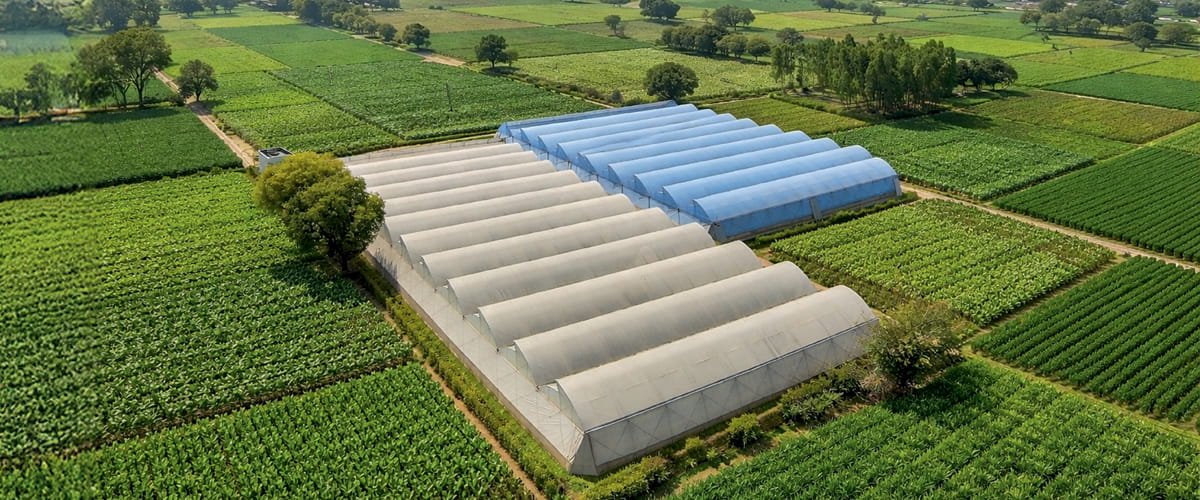
Soilless cultivation inside a Naturally Ventilated Polyhouse (NVPH) is rapidly emerging as the most profitable model for progressive Indian farmers. By eliminating soil-borne diseases, maximising space through vertical growing, and enabling year-round production, soilless growing delivers significantly higher yields than traditional soil-based methods — all within the same 1-acre footprint.
In this detailed guide, we break down everything you need to know about setting up a 1-acre NVPH soilless polyhouse, from crop selection and operational costs to season-wise revenue projections for Capsicum (Bell Pepper) and Cucumber. Every figure is drawn from real Agrifirst farm data.
Yields from soilless cultivation are significantly higher as a result of intensive practices and the possibilities of continuous, year-round production. It also allows maximising space constraints through vertical growing techniques — making it ideal for urban and peri-urban agriculture.
Why Choose Soilless Growing Over Soil-Based Cultivation?
The biggest benefit of soilless growing is the yield advantage. Soilless systems like cocopeat-based growing allow farmers to achieve higher plant densities, better nutrient control, and elimination of soil-borne pathogens. Here's how soilless compares:
| Parameter | Soil-Based | Soilless (Cocopeat) |
|---|---|---|
| Yield consistency | Variable | Highly consistent |
| Soil-borne disease risk | High | Eliminated |
| Space utilisation | Standard | Vertical growing possible |
| Year-round production | Seasonal | Continuous |
| Nutrient control | Limited | Precise fertigation |
| Scalability | Limited by soil quality | Scale to any size |
Annual Operational Expenses — 1 Acre Soilless NVPH
Running a 1-acre soilless NVPH involves recurring annual costs for labour, fertigation inputs, cocopeat media, and plant protection. Here's the complete breakdown:
| Expense Head | Annual Cost |
|---|---|
| Labour cost | ₹2,50,000 |
| Fertilizer cost | ₹4,50,000 |
| Pesticide | ₹35,000 |
| Seed & plant cost | ₹80,000 |
| Cocopeat replacement cost | ₹1,50,000 |
| Other costs | ₹50,000 |
| Total Annual Operation Cost | ₹10,00,000 |
Capsicum (Bell Pepper) — Soilless ROI for 1 Acre
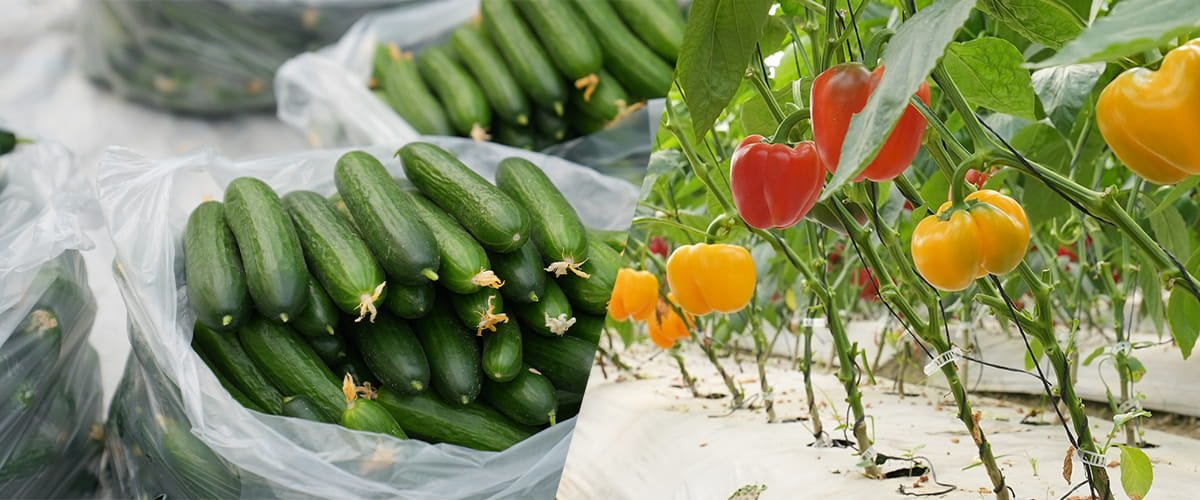
Coloured capsicum is the highest-value crop for soilless NVPH cultivation. With controlled fertigation and disease-free cocopeat media, farmers consistently achieve 25 MT yield per acre in a 10-month growing cycle.
Season-Wise Yield & Revenue — Capsicum
| Harvest Period | Quantity | Rate/kg | Revenue |
|---|---|---|---|
| Oct – Nov – Dec | 6,000 kg | ₹150 | ₹9,00,000 |
| Jan – Feb | 9,000 kg | ₹100 | ₹9,00,000 |
| Mar – April | 7,000 kg | ₹75 | ₹5,25,000 |
| May – June | 3,000 kg | ₹85 | ₹2,55,000 |
| Total Yield / Gross Return | 25,000 kg | ₹25,80,000 |
Profit Calculation — Capsicum (1 Acre Soilless)
| Item | Amount |
|---|---|
| Field preparation & plantation | ₹1,25,000 |
| Fertilizer & pesticides | ₹3,16,000 |
| Labour cost for operation | ₹3,25,000 |
| Total Expense | ₹7,66,000 |
| Revenue Generated | ₹25,80,000 |
| Net Return Per Acre | ₹18,14,000 |
Cucumber — Soilless ROI for 1 Acre
Cucumber is the volume champion of soilless polyhouse farming. With an impressive 85 MT yield per acre across three growing cycles, it delivers strong returns even at lower per-kg rates.
Detailed Operational Costs — Cucumber (Soilless)
Land Preparation Costs
| Input | Qty | Rate | Amount |
|---|---|---|---|
| Neem cake | 1000 kg | ₹18/kg | ₹18,000 |
| Vermi compost | 6000 kg | ₹5/kg | ₹30,000 |
| SSP, MgSO4, MOP, micronutrients | — | — | ₹7,475 |
| Mulching film & bed preparation | — | — | ₹31,600 |
| Land Preparation Sub Total | ₹88,075 | ||
Production & Operational Costs
| Item | Amount |
|---|---|
| Planting material (12,000 plants/year @ ₹6) | ₹72,000 |
| Fertigation chemicals (13-00-45, Ca Nitrate, 12-61-00, etc.) | ₹58,000 |
| Plant protection (preventive + curative) | ₹32,000 |
| Labour (3 workers/day @ ₹200 for 300 days) | ₹1,80,000 |
| Packing, transport, diesel, foliar spraying, misc | ₹74,000 |
| Production Sub Total | ₹4,16,000 |
Profit Calculation — Cucumber (1 Acre Soilless)
| Item | Amount |
|---|---|
| Field preparation | ₹87,675 |
| Production cost | ₹5,26,500 |
| Total Expense | ₹6,14,175 |
| Revenue Generated | ₹22,90,000 |
| Net Return Per Acre | ₹16,75,825 |
Why Size Matters — The 1 Acre Advantage
Scaling to a full 1-acre NVPH unlocks several advantages that smaller farms simply cannot match:
- Automation viability — Fertigation automation, climate sensors, and drip systems become cost-effective at 1 acre, increasing fertilizer use efficiency and crop productivity per unit area.
- Better manpower utilisation — Easier to retain permanent, skilled labour. Better utilisation of skilled workers alongside unskilled ones.
- Bulk input savings — Fertilizer, seeds, and chemicals purchased in bulk save 15-25% compared to small-quantity buying.
- Buyer attraction — Larger volumes attract wholesale buyers, enabling better price realisation and access to distant marketplaces.
- Expert affordability — Hiring a qualified agronomist consultant becomes economically viable, mitigating crop failure risks and saving time and money.
Critical Polyhouse Factors Before You Start
Before investing in a soilless NVPH setup, ensure these critical factors are addressed:
- Soil type, fertility & water test analysis
- Upland field site selection
- Slope selection for drainage
- Air ventilation around the site
- Height of structure (min 5.5m recommended)
- Covering film properties (UV, diffusion)
- Dust/smoke pollution assessment
- Rainwater drainage planning
Major Post-Installation Operations
Once your soilless NVPH is set up, the farming cycle follows a structured 9-step process:
Agrifirst's Soilless Growing Support Ecosystem
Soilless growing requires more technical precision than soil-based farming. That's why Agrifirst provides a complete support ecosystem to ensure every farmer succeeds:
Start Your Soilless Farming Journey with Agrifirst
With 450+ successful hi-tech farms and 100,000+ professionally trained farmers, Agrifirst is India's most trusted partner for soilless polyhouse farming. Whether you're a first-time farmer exploring protected cultivation or an experienced grower looking to upgrade to soilless technology, our team is ready to help.
Ready to Earn ₹18+ Lakhs Per Acre?
Connect with Agrifirst for a free consultation on soilless NVPH polyhouse setup
Get Free Consultation →📞 +91 8188084460 | 📧 info@agrifirst.in










Share your thoughts